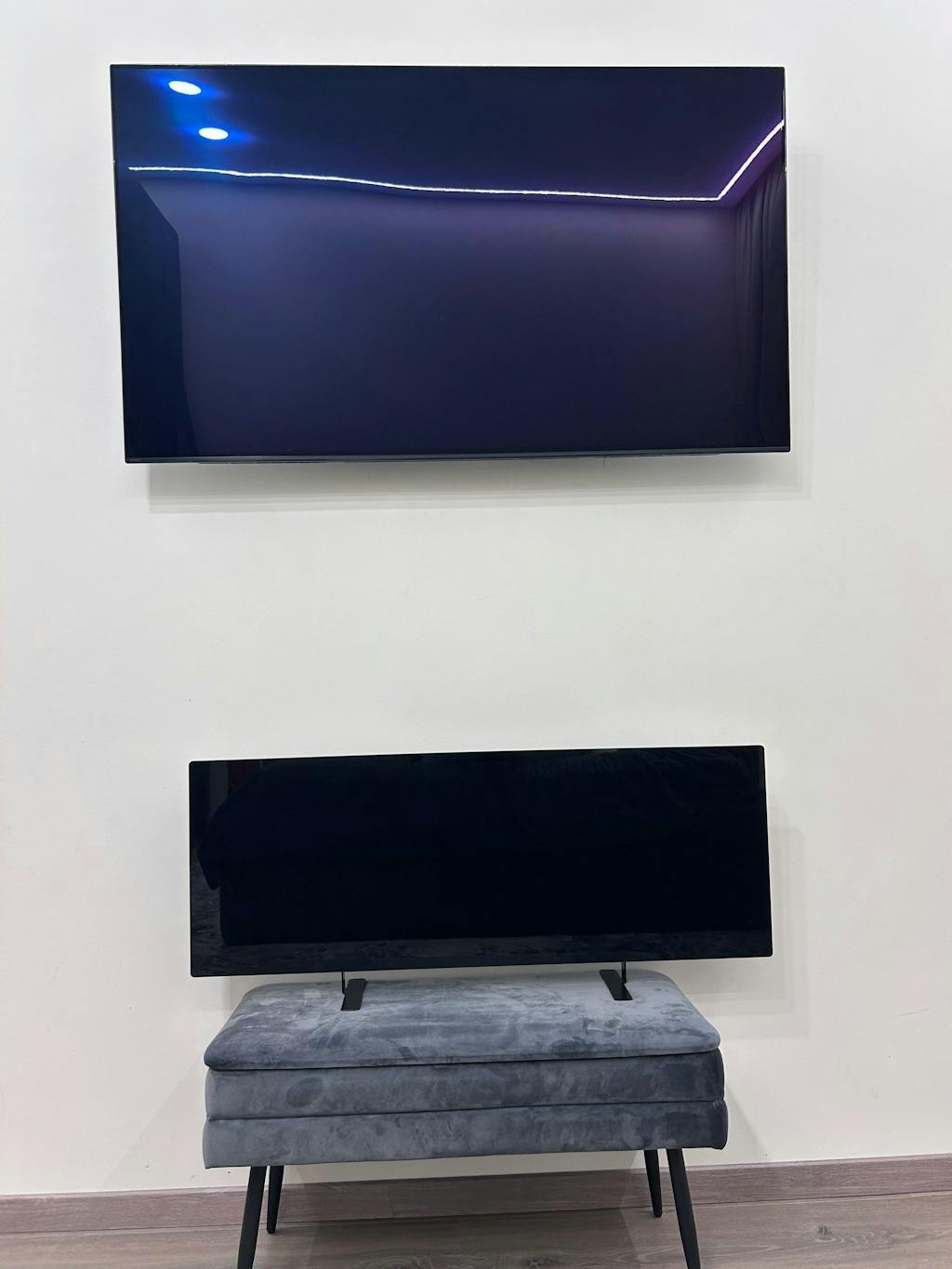
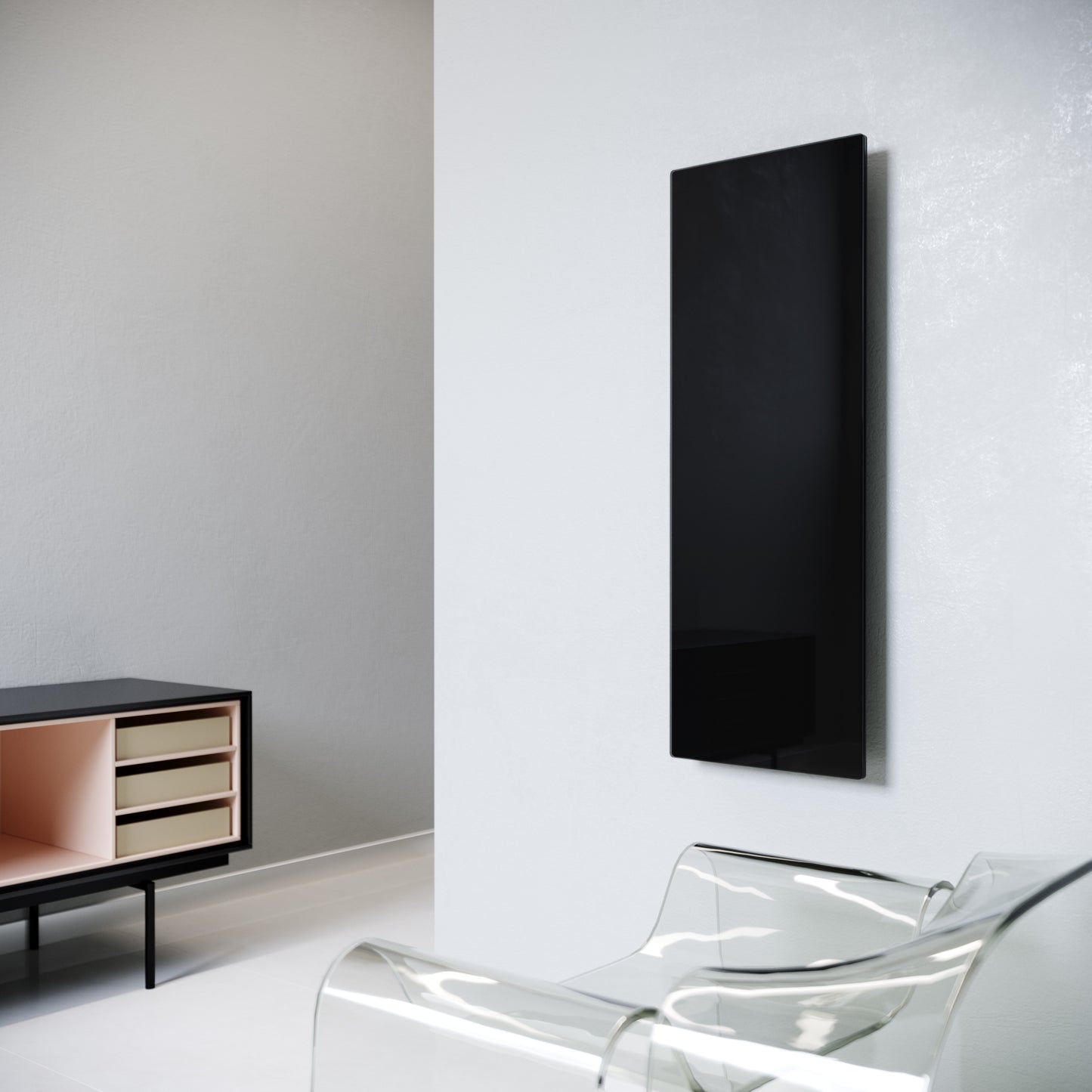
Premium Infrared Glass Heater, Black 670W
Premium Infrared Glass Heater, Black 670W
Couldn't load pickup availability
What does it actually cost to heat a room with electricity in Estonia?
Most heater pages answer this with a power rating on a label. We can answer it with measured data: our panels report their consumption every hour, and below are the real numbers from the 2025/26 heating season.
A Premium Infrared Glass Heater 670 W, working as the only heat source in a room it is correctly sized for, used about 1 100 kWh over the October–April season. At Estonian household prices that is roughly €255 for the whole season — around €1.20 a day on average, and about €58 in February, the hardest month.
The short version. Coldest month: ~€2.05 per day. Season average: ~€1.20 per day. As a supplementary heater in a room that already has heating: ~€0.39 per day, about €80 for the season.
Estonian household, spot-price contract, Võrk 2 network package, all network fees, state charges and 24% VAT included — 23.2 cents per delivered kWh. Prices in Latvia, Lithuania and Finland differ; the kWh figures do not.
What will it cost in your room?
—
—
—
Three ways to make that number smaller
- A weekly schedule. Heating a room only when someone is in it takes the season from ~1 100 kWh down to ~740 — about €85 saved. This is the single biggest lever, and it costs nothing but five minutes in the app.
- Night and weekend network tariff. On Võrk 2 a kWh at night costs 3.18 cents less than the same kWh during the day. The panel shifts heating into those hours by itself.
- Nord Pool automation. The panel reads tomorrow's exchange prices and prefers the cheaper hours. Together with the night tariff this takes about 13% off the bill.
We are deliberately not promising more than that. A room is not a water tank: it cannot store a night's worth of heat and coast through the expensive morning hours, so price automation helps a heater less than it helps a boiler. In our own monitoring, panels save around 7–8% of their consumption this way, while smart plugs on water heaters save about 19%. The schedule is where the real money is.
How it works
- Mount it on the wall with the bracket in the box — four screws, about 10 minutes
- Connect it in the GPO Home app and set the temperature you want in the room
- Set the weekly schedule, or switch on Nord Pool mode and let the panel choose the cheapest hours
Will 670 W be enough for my room?
This is the question that decides whether you will be happy with the panel, so here is the honest answer rather than the flattering one.
In our monitored installations, about a third of the panels spent December–February with the room more than 1 °C below the temperature that was asked for. Those panels were not faulty and they were not idle — they ran at roughly half duty and consumed more electricity than the panels that did reach their target. They were simply fitted to rooms that lose more heat than one panel can replace on the coldest days.
A panel matched to its room behaves differently: in mid-winter it runs about a third of the time and uses around 5.3 kWh a day. An undersized one runs half the time, uses about 8.4 kWh a day, and still leaves the room cool. Undersizing costs more and delivers less.
Sizing guide for this panel, 670 W:
- 10–14 m² as the only heat source — a modern or well-insulated room, one window, heat loss around 45–60 W/m²
- 7–9 m² as the only heat source — an older building with single glazing or an uninsulated wall, heat loss 80–100 W/m²
- Up to 25 m² as supplementary heat — the room already has central heating and the panel adds comfort
If your room is larger: two panels instead of one
The limit is not the average. Over a whole month a single 670 W panel covers the average heat loss of quite a large room — it runs out of capacity on the coldest days, when the room needs more heat per hour than one panel can produce. That is why an undersized panel sits at full power and the room still drifts a few degrees below target.
The fix is a second, smaller panel rather than a bigger single one: Premium Infrared Glass Heater 500 W next to it gives you 1 170 W across two surfaces.
What it costs. The second panel does not double your bill. Your bill goes up because the room is now actually reaching the temperature you set instead of sitting 5–6 °C below it — you are paying for those degrees, not for the extra appliance. Closing a gap of that size adds roughly 40% to consumption during the cold months, about €0.80 a day, or around €80 across the season. Two panels holding a room at 21 °C cost the same as one panel would if it could hold 21 °C, because the electricity is set by the room's heat loss, not by how many panels share the work.
What it buys.
- The temperature you actually asked for — a 5–6 °C difference in a living room is the difference between a jumper and no jumper
- Roughly twice as fast to warm up — 1 170 W of heat against the same heat loss closes the gap in about half the time
- Even warmth instead of one hot spot — two radiant surfaces on different walls remove the cold corner that a single panel always leaves
- Both panels run cooler and cycle less, which is quieter on the glass and gentler on the electronics
If you are not sure which case you are in, send us the room size, the building year and the number of windows at shop@gpo-tech.com — we will tell you whether one panel is enough, and we would rather talk you into two now than take a return in January.
Glass panel, oil radiator, or a plain convector?
| Oil radiator | Plain convector | GPO glass panel | |
|---|---|---|---|
| Electricity used for the same room at the same temperature | the same | the same | the same |
| Electricity used in practice | higher — no schedule, heats an empty room | higher — mechanical thermostat overshoots | lower — schedule, room sensor, price automation |
| Weekly schedule from your phone | ✕ | ✕ | ✓ |
| Nord Pool price automation | ✕ | ✕ | ✓ built in, no subscription |
| Heats surfaces and people, not just air | partly | ✕ | ✓ |
| Moves dust around the room | some | yes, fan-driven | minimal |
| Thickness on the wall | — | — | 11 mm |
| Warranty and support | varies | varies | 5 years, Tallinn |
Note the first row, because no other heater page will tell you: every electric heater turns essentially all of its electricity into heat. For the same room at the same temperature, the kWh are the same whatever you buy. Our own monitoring shows this plainly — in February, 500 W and 1 000 W panels in different rooms consumed almost the same amount per day, because the room sets the energy, not the label. What a good heater changes is when and where that energy is spent. That is the whole case for a controllable panel, and it is enough.
What owners say
⭐ 4.6 / 5 from verified customer reviews.
Price and delivery
€270 €330
Pre-season price — valid until 15 October 2026.
✅ Delivery to Estonia, Latvia, Lithuania and Finland — 1–3 working days
✅ 14-day returns, no questions asked — we arrange the courier for bulky items
✅ 5-year warranty from GPO OÜ, Tallinn
✅ Card, Apple Pay, Klarna
Technical specifications
- 670 W rated; 200–350 W average in use. The thermostat cuts the heat once the room reaches the set temperature, so the average draw over a winter month is roughly half the rating
- Tempered black glass, 1000 × 365 × 11 mm, 10 kg. Wall-mounted, vertical or horizontal
- Fully insulated heating element. Safe around children and pets; the surface is temperature-limited and the glass does not scorch dust
- Wi-Fi and Bluetooth. With internet, control it from anywhere; without it, Bluetooth works up to 50 metres and the panel keeps running its last schedule
- Room sensor, weekly schedule, timers, Nord Pool mode — all in the free GPO Home app, no subscription
- Voice assistants supported
- In the box: panel, wall bracket, device passport
- Made in Estonia. CE marked, TÜV NORD certified for EMC and LVD
FAQ
❓ How much will it add to my electricity bill?
As the only heat source in a correctly sized room: about €1.20 a day averaged over the season, ~€58 in February, roughly €255 for October–April at Estonian prices. As supplementary heat: about €0.39 a day. With a weekly schedule, around €85 less over the season.
❓ How do I know if one panel is enough for my room?
As the only heat source, count on 10–14 m² in a well-insulated room and 7–9 m² in an older building. Above that, either use it as supplementary heat or add a second panel. Send us the room size and building year and we will check it for you.
❓ What if it does not reach the temperature I set?
Then the room loses more heat on cold days than one panel can replace. Adding a 500 W panel on another wall fixes it — expect about €0.80 a day more during the cold months, and the temperature you actually asked for. Within 14 days you can also simply return the panel.
❓ Does it work if the internet goes down?
Yes. The schedule and target temperature live in the panel. It keeps heating and syncs again when the connection returns.
❓ Can I use it in a bathroom?
Yes, outside the direct splash zone. For bathrooms specifically we also make glass towel dryers that heat the room and dry towels at the same time.
❓ Is mounting complicated?
Four screws for the wall bracket, then plug it in. No electrician and no wiring — it runs from an ordinary socket. The panel is wall-mounted only; at 10 kg it needs a solid fixing, and any standard wall anchor for that weight will do.
❓ Which languages do the app and support work in?
The app is in Estonian, Latvian, Lithuanian, Finnish, Russian and English. Support answers in Estonian, Russian and English.
Ready to stop guessing what heating costs?
Delivery to Estonia, Latvia, Lithuania and Finland • 14-day returns • 5-year warranty
📞 shop@gpo-tech.com • +372 5760 6060 • Mon–Fri, 9:00–17:00 EET
Consumption figures come from GPO's own device telemetry for the 2025/26 heating season, October to April, covering panels in the 670 W class that report hourly. Months with incomplete data and statistical outliers are excluded. Costs are calculated at 23.2 cents per delivered kWh — an Estonian household on a spot-price contract with the Võrk 2 network package, exchange price 10 c/kWh, including network fees, renewable and security-of-supply charges, excise and 24% VAT. Your own consumption depends on your room, your insulation and the temperature you choose.